
Recommended UT-Austin Majors Rank and Test Score Minimums

Chopping up freshly gathered coconuts in Kurrimine Beach, Far North Queensland, Australia
Hoping to make the cut for UT-Austin? What rank and test scores do you need to be competitive? Worried you rank outside of the top 5%?
It’s no secret that UT admissions are more competitive than ever. For fall 2026, UT received approximately 100,000 applications, admitting around 15,000 applicants for an enrolling freshmen class of 8,000 - 8,500 for Fall 2026 applicants. The overall UT admissions rate is around 15%, but it’s substantially more competitive for STEM/business applicants, out-of-state students, and Texas residents who rank outside the top 5%.
The McCombs School of Business is one of the few programs that release their applied and admitted student data.
Fall 2023: applied 11,433, admitted 1,625, and enrolled 1,044. Admissions rate 14%. Average SAT 1450 and ACT 32. Average rank 4.8%
Fall 2024: applied 12,813, admitted 1,454, and enrolled 924. Admissions rate 11%. Average SAT 1470 and ACT 33. Average rank 4%.
Fall 2025, McCombs received 16,500 applications for admission and likely admitted around 1,000 students, for an admissions rate of 6%.
Fall 2026 - if anyone has this information from an admitted student information session, please send it over kevin@texadmissions.com
If the McCombs admissions rate is around 6%, we can assume the admissions rate for the most competitive majors like CS, ECE, and biomedical engineering are in the low-to-mid single digits.
I recommend, in this recent post, strongly considering alternatives to Computer Science unless you have near-perfect academics and an excellent STEM/CS resume. You can also consult this post for STEM honors programs.
The admissions rate for Texas residents outside of the top 5% is likely below 10%. Less than 5% of out-of-state and international students gained admission.
My professional ethic
I prefer not to take students who are outside the top 15% or who score less than 1400/31 on the SAT/ACT, whose primary focus is UT-Austin.
It isn’t appropriate for me to accept fees when I feel the student has little to no chance of gaining admission to UT. However, in each cycle, I work with a few students who have lower academic profiles and are aiming for schools outside the top 50, such as Texas A&M, CU-Boulder, Clemson, Tennessee, SMU, TCU, Baylor, Oklahoma, South Carolina, Indiana, Wisconsin, etc.
Outstanding academics are necessary but no guarantee of admissions success. Since UT and most other universities “holistically review” their applicants, you need to have a strong resume demonstrating your “fit” for your desired program. Nowadays, it’s expected to have relevant experiences to be competitive, especially in STEM. Students with great academics who are well within the charts below will routinely get denied.
In this post, I present data from the past four years to visualize your chances and help you select your first-choice college/school/major. I have summarized my client data since 2017 and provided an overview of how UT uses rank and test scores. I discuss my process for producing these academic minimum rules of thumb and conclude with a conversation about how these can help build your college list and decide whether UT is a realistic match.
Summary of client outcomes from Fall 2017-2026
Approximately 63% of my first-time freshman clients (294 of 467) and 76% of transfers (94 of 124) have gained admission to their first-choice UT-Austin major since Fall of 2017. My CS, Engineering, CNS, and Business clients gained admission 175 out of 255 attempts (69% STEM acceptance rate).
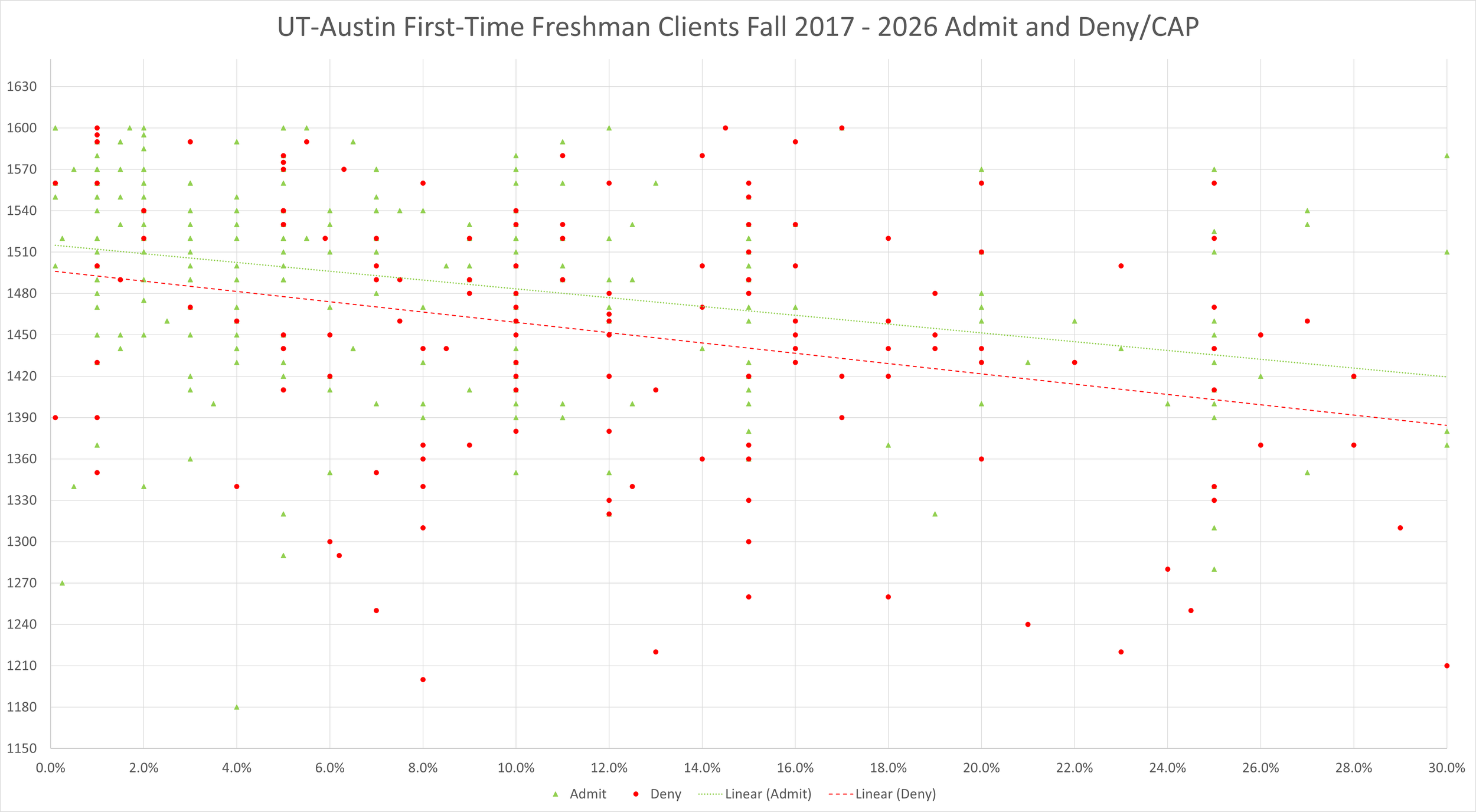
N = 455. Test optional and Early Decision admitted at other universities not featured
Texas Residents rank and test score minimum recommendations by college and school
When students complete my questionnaire for a free consultation, I don’t hesitate to share the disappointing news if they are highly unlikely to get in. Every year, I also get a few wrong with students who receive pleasantly surprising news of their admission. There are always exceptions in both directions.
These are the rules of thumb, conservative estimates. I’ve built them based on general competition trends from previous years, the approximate number of spaces available, data from my clients, observations from online communities, and forecasting a more competitive environment in future years.
I use these to determine whether my professional services could help a student gain admission. I turn down many more prospective clients than I pitch because I only feel comfortable working with students who I feel have a reasonably good shot at getting in.
Drawing on three years at UT five years working with students independently, I provide below my best guesses for whether UT is worth applying and considering.
Note: I include only Texas residents recommendations here. International and out-of-state students should presumably have higher academics than these to consider UT a “match” school
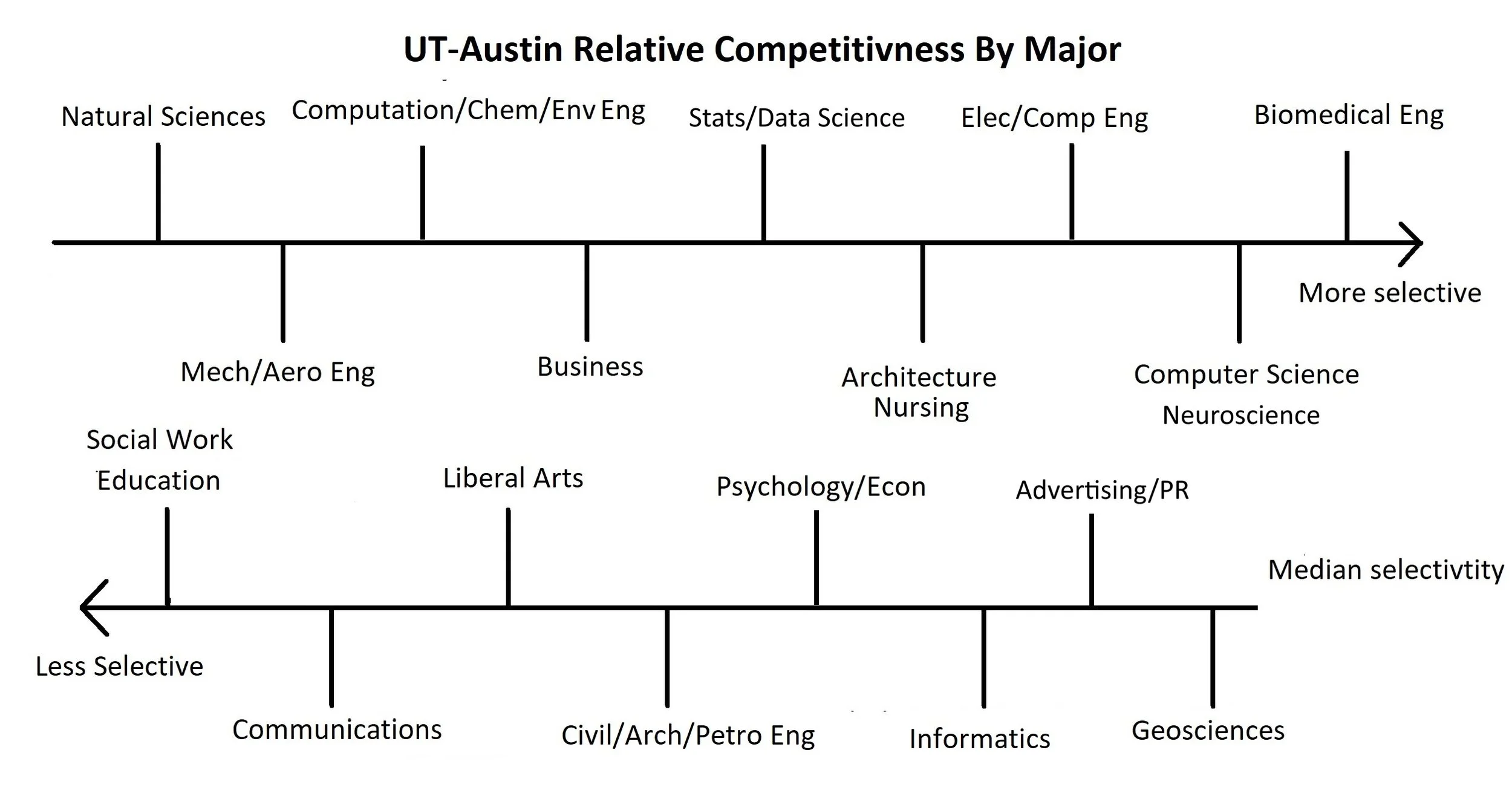
Fine Arts not modeled because their majors have widely varying admissions processes and selectivity. Updated April 2026
Academic Minimum Recommendations for Prospective Fall 2027 Clients
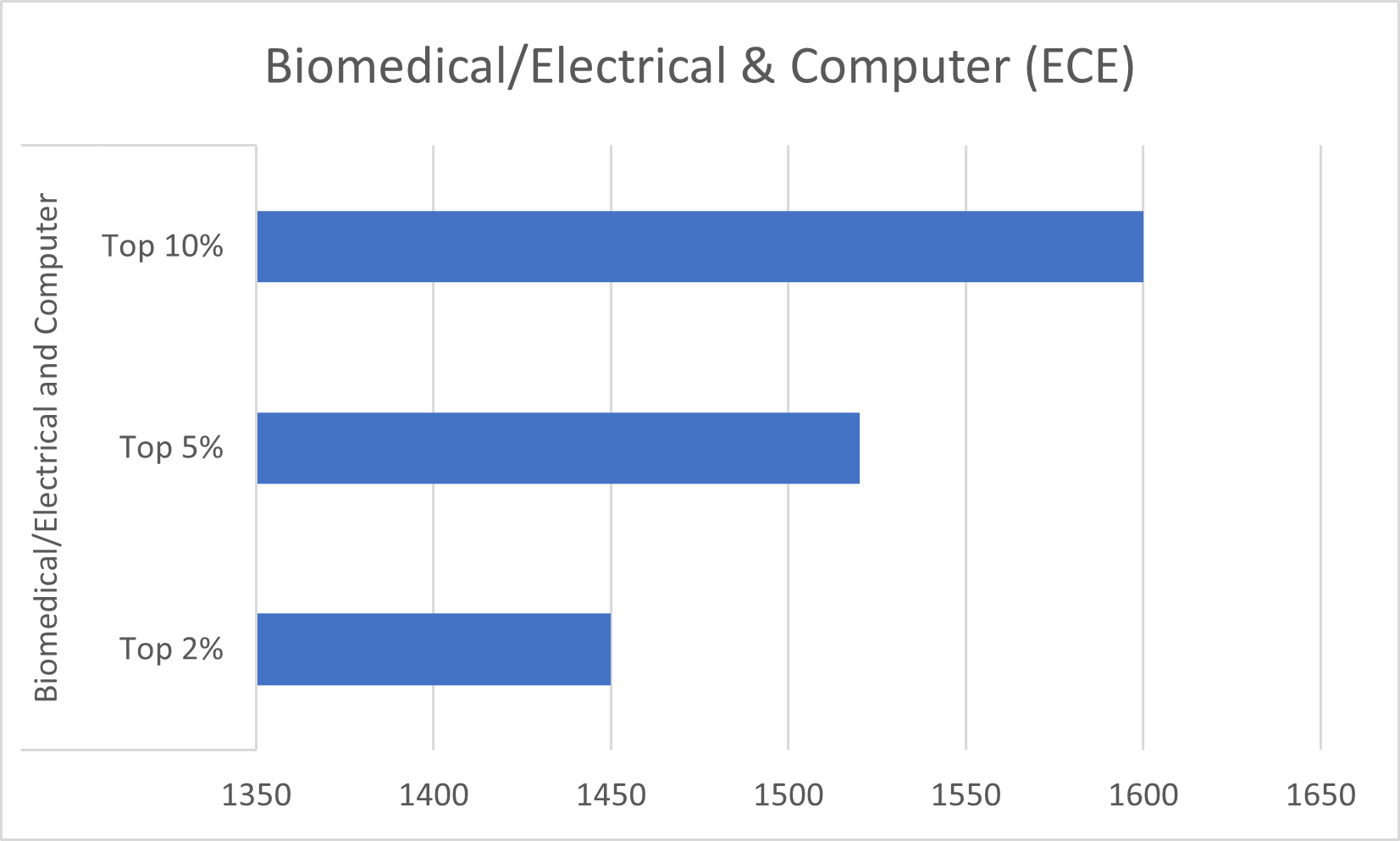
I have excluded Fine Arts from these recommendations because the audition or portfolio plays a large role in their process. I have broken up Engineering into similarly competitive groups since, unlike most other UT programs, decisions are made on the major selection rather than the college/school.
STEM programs place more weight on the math/quantitative subscores, so there are exceptions to these rules of thumb, which present only the SAT Composite. You can convert your ACT score using these tables.

Competitive CS applicants absolutely need relevant programming and coding experiences, moreso than any of the other UT majors.

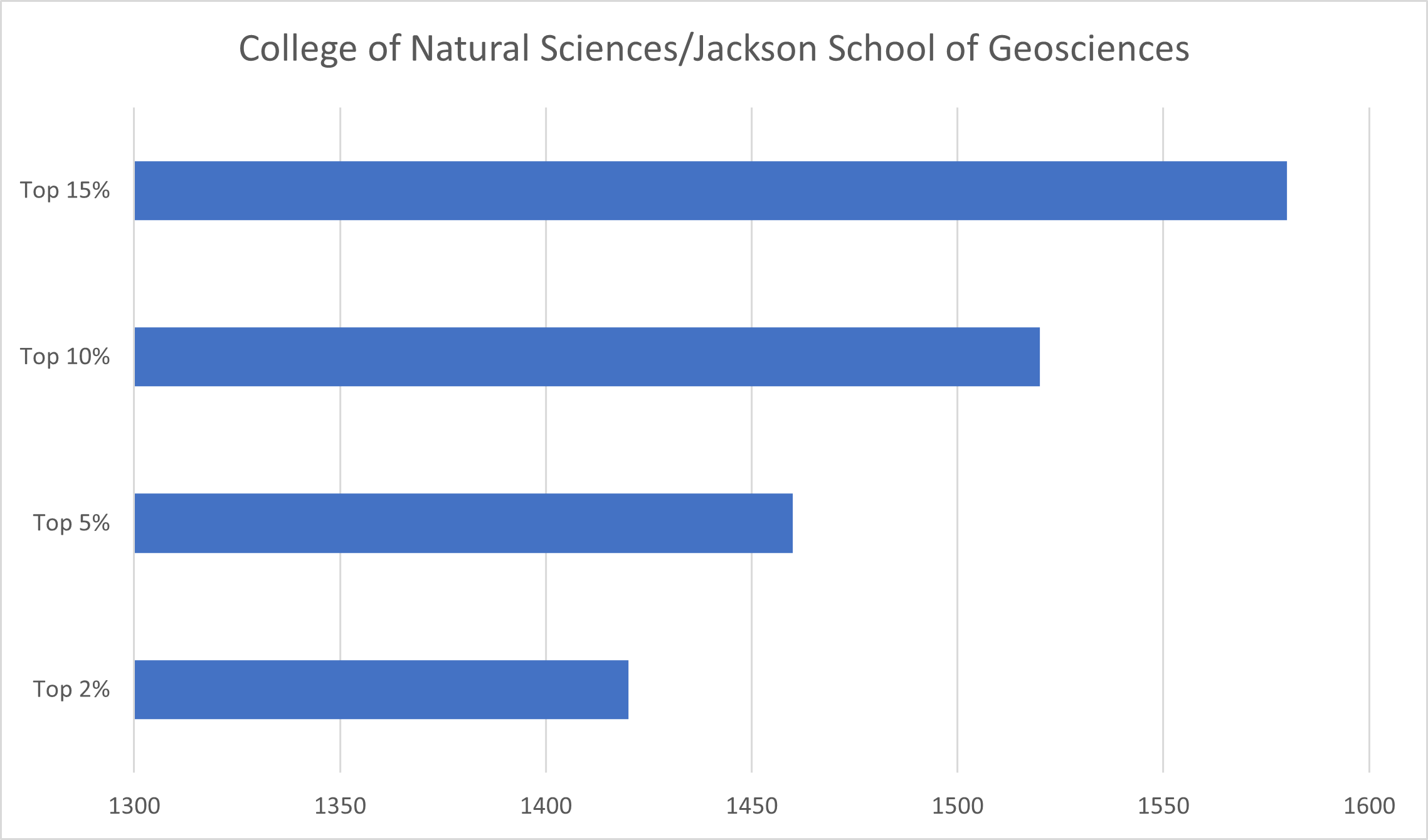


Note that advertising/public relations are the most popular Moody majors. My recommendations are slightly higher for these.

Note: Top 6% Texas Residents are guaranteed Liberal Arts if they choose it first. The top 2 and 5% rules of thumb are for OOS/Foreign applicants.


Cockrell School of Engineering Recommended Rank and Test Score
Below, I estimate the relative competitiveness between engineering majors and provide rules of thumb for UT Cockrell majors to be an academic match.
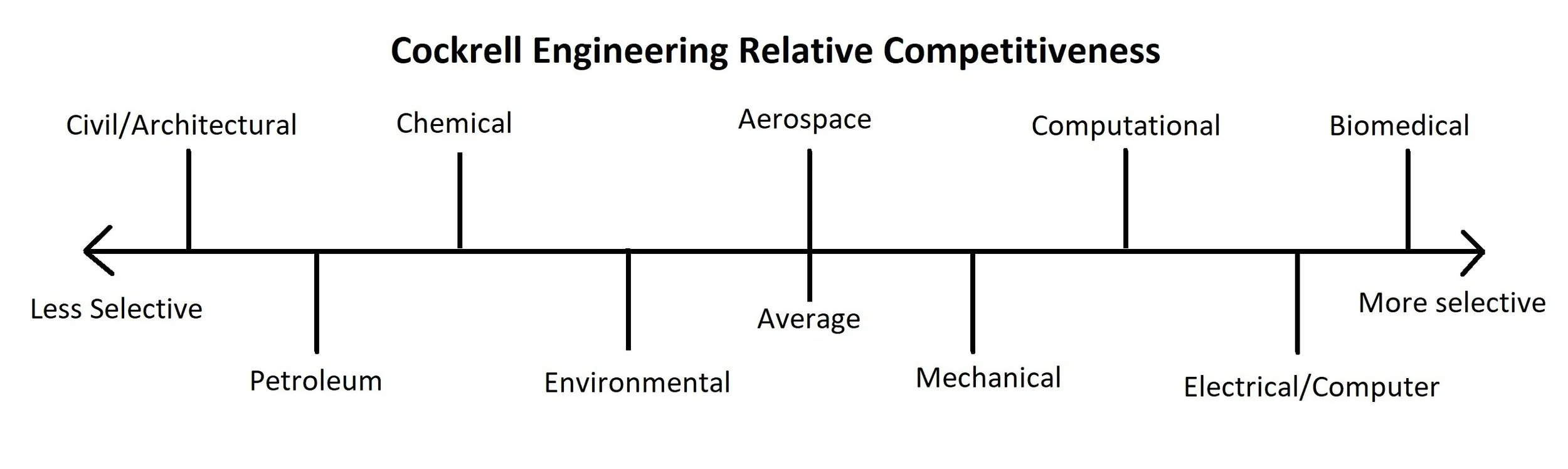
These are rough guides and approximate speculations. Updated April 2026
I have also shared the total undergraduate enrollment by major to show you how the sizes of each department vary drastically.

Table generated by ChatGPT
Here are my recommendations for each major.


Check out my new book Surviving the College Admissions Madness and Youtube Channel
What to make of these recommendations?
My message isn’t to deter anyone from applying to UT. My hope is that students and families begin managing their expectations will in advance of receiving their decisions. Putting all of your emotional eggs in the same college basket, especially one was selective as UT, is setting you up for potential heartbreak later.
Because UT makes admissions decisions based on a student’s first choice college or school, it is a good idea to at least have a family conversation about aiming for a different program if you’re anxious about your chances.
Having realistic expectations is important for building your college list with “match” programs where you have a reasonable chance of gaining admission. All students need at least one “assured” program where they will 100% gain admission based on their rank and test scores.
Again, these recommendations are conservative estimates whether UT is a realistic possibility. Last year, I had a few clients gain admission that I probably wouldn’t take on this year, and others who I felt confident would gain admission that don’t.
College admissions is extremely uncertain and unpredictable. Variables like rank and test score are two among many.